
NZBIO.ORG.NZ //
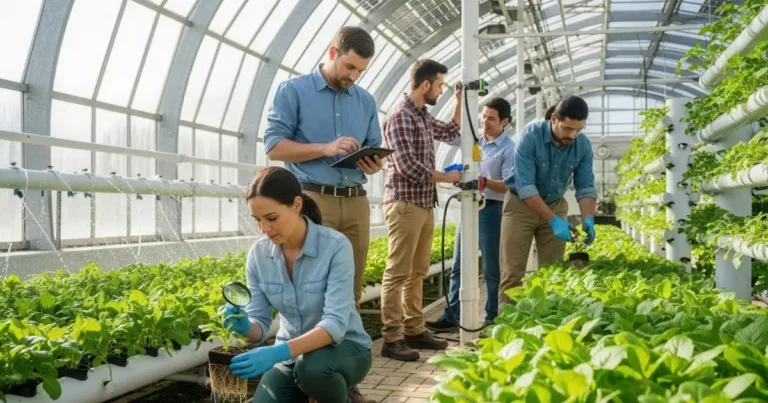
While the world grapples with feeding an expected 673 million people facing hunger in 2024, a small nation at the bottom of the world is quietly becoming a powerhouse in agricultural technology. New Zealand’s AgriTech sector is punching well above its weight, developing innovative solutions that could help address some of humanity’s most pressing food security challenges.
With 343 AgriTech startups now operating across the country, New Zealand has transformed itself from a traditional farming economy into a sophisticated innovation ecosystem where cutting-edge technology meets generations of agricultural expertise. It’s a combination that’s proving remarkably effective at creating solutions the world desperately needs.
The story of New Zealand’s AgriTech revolution isn’t just about technology for technology’s sake. It’s about solving real problems that farmers face every day while building tools that can scale globally. Take Halter, for instance. Founded in 2016, this Auckland-based company has developed GPS-enabled smart collars that allow dairy farmers to manage their herds remotely. What sounds like a simple innovation has profound implications when you consider the labour shortages affecting agriculture worldwide.
Halter’s technology was recognised by the World Economic Forum as a Technology Pioneer in 2022, and it’s easy to see why. The system doesn’t just track cows; it uses behavioural insights and advanced GPS to reduce labour requirements while improving animal welfare and environmental outcomes. It’s the kind of practical innovation that emerges when you combine deep agricultural knowledge with sophisticated technology.
Then there’s BioLumic, which has taken an entirely different approach to increasing food production. Established in 2013 in Palmerston North, BioLumic discovered that exposing seeds and seedlings to specific ultraviolet light recipes can enhance plant growth, increase disease resistance, and reduce the need for chemical treatments. Their technology is being trialled in over 20 countries and has attracted partnerships with agricultural giants like Bayer and Syngenta.
New Zealand’s success in AgriTech isn’t accidental. The country has deliberately built an ecosystem that supports agricultural innovation through a combination of government backing, research excellence, and practical farmer input. Government initiatives such as the Sustainable Food and Fibres Futures Fund provide crucial funding for research and development, while organisations such as Callaghan Innovation offer mentorship, technical support, and connections to global markets.
The numbers tell a compelling story. According to research from Finistere Ventures, New Zealand’s public and corporate research and development in AgriTech now exceeds US$500 million annually. More than 40 AgriTech startups have been created since 2013, representing about 20 per cent of seed activity by deal value in the country. For a nation of just five million people, that’s a remarkable concentration of innovation.
What makes New Zealand particularly effective is its unique position as both a major agricultural producer and an advanced technology developer. Agriculture and horticulture exports exceed US$37 billion annually, while technology has become the country’s third-largest export sector. The intersection of these two strengths creates a natural testing ground where innovations can be validated on real farms before scaling globally.

The global context makes New Zealand’s AgriTech boom particularly timely. Climate change, population growth, and resource constraints are creating unprecedented pressure on food systems worldwide. The 2025 Global Report on Food Crises revealed that conflict, economic shocks, and climate extremes continue to drive food insecurity, with catastrophic impacts on already fragile regions.
New Zealand startups are developing solutions that directly address these challenges. Robotics Plus, founded in 2013 in Tauranga, has developed robotic apple packers and autonomous farm vehicles to address labour shortages and increase efficiency. Their Robotic Apple Packing Cell has already handled more than 8.5 million apples in commercial trials, demonstrating that automation can work at scale in real agricultural settings.
The country’s commitment to sustainable agriculture also sets it apart. New Zealand AgriTech companies prioritise eco-friendly solutions that reduce water waste, minimise chemical usage, and promote regenerative farming practices. This focus on sustainability isn’t just good ethics; it’s increasingly good business as consumers and regulations demand more environmentally responsible food production.
Perhaps one of New Zealand’s most innovative contributions to the global AgriTech ecosystem is Sprout Agritech, a startup accelerator founded in 2015 in Palmerston North. Sprout has supported more than 250 entrepreneurs, providing funding, mentorship, and access to global networks. It’s this kind of infrastructure that helps ensure individual innovations can scale and reach the markets where they’re needed most.
The country is also becoming a destination for international AgriTech companies looking to test their solutions. Recent initiatives like the Land x Launch programme are bringing global startups to New Zealand to validate their technologies in what’s increasingly seen as a sophisticated agricultural testbed. These companies benefit from working alongside Kiwi farmers, agronomists, and industry leaders who have generations of practical experience.
Looking ahead, the potential seems enormous. A recent report by Boston Consulting Group outlined a vision for New Zealand to become a global AgriTech powerhouse by 2050, positioning itself as a living laboratory where world-leading research, innovative talent, and cultural values converge.
The report suggested that achieving this vision will require doubling foreign and domestic investment, supporting startups to scale internationally, and embedding Māori cultural values, such as kaitiakitanga (guardianship), into the fabric of New Zealand’s AgriTech proposition.
What’s particularly encouraging about New Zealand’s AgriTech revolution is that it’s not just about creating technology; it’s about creating practical solutions that work in the real world. These are innovations developed by people who understand farming intimately, tested on actual farms, and refined through direct feedback from the people who will ultimately use them.
As global food security challenges intensify, the world needs more of what New Zealand does well: combining deep agricultural expertise with cutting-edge technology to create solutions that are both innovative and practical. From smart cow collars in Waikato to UV light treatments in Palmerston North to robotic packers in Tauranga, Kiwi ingenuity is helping write the next chapter in how humanity feeds itself.
The Kiwi AgriTech revolution demonstrates that you don’t need to be a large nation to make a significant global impact. What you need is the right combination of expertise, innovation, and commitment to solving real problems. New Zealand has that combination, and the world is starting to take notice.

The NZBIO website serves as a valuable platform that showcases success stories of New Zealand businesses across diverse industries, offering inspiration and promoting entrepreneurship. The website provides essential resources and information for aspiring entrepreneurs to navigate the intricacies of establishing and growing a business. Moreover, it facilitates connections with potential partners, investors, and collaborators, thereby contributing to the growth and success of New Zealand’s business landscape.
To promote your business with NZBio.org.nz contact us now.
Lauren White says:
The focus on sustainable farming practices is something we talk about a lot in early childhood settings—kids are naturally curious about where food comes from, and having local AgriTech solutions means we can actually show them real examples of innovation happening right here. If you’re working with schools or centres, connecting with these startups for farm visits or virtual tours could give children hands-on learning about problem-solving and environmental stewardship.
Steve Patterson says:
The export angle here is where it gets interesting. Most NZ agritech founders are building for global problems, but they’re constrained by local market size early on. I’d be curious whether these startups are prioritising US/Asian distribution from day one or if they’re treating the domestic market as a proving ground first, because that timing decision usually determines whether they scale or plateau.
Michelle Adams says:
The detail around vertical farming systems caught my eye—there’s something beautiful about how these startups are reimagining what “growth” actually means, whether it’s crops or businesses. If you’re scaling one of these solutions, document your early failures as meticulously as your wins, because that’s what investors and future collaborators genuinely want to understand.